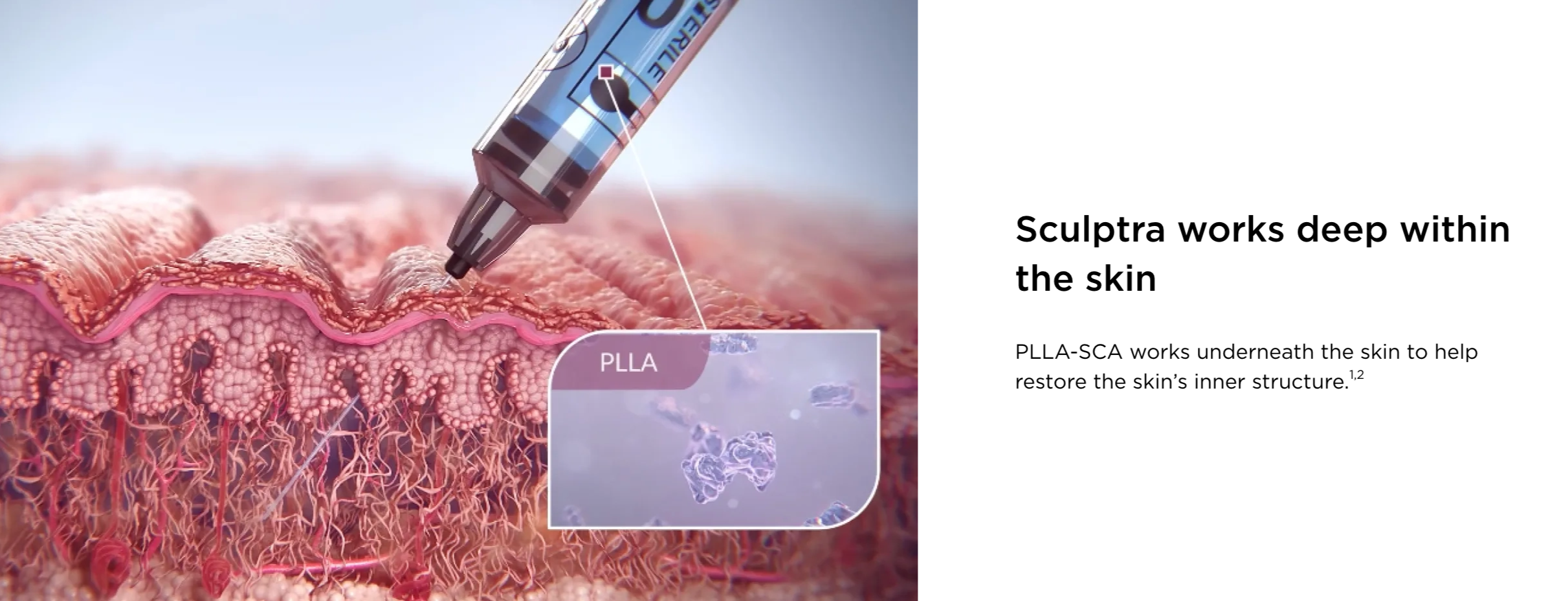
Sculptra is an FDA-approved injectable collagen biostimulator used to gradually restore facial volume and improve skin quality by stimulating the body's natural collagen production. Made with poly-L-lactic acid (PLLA), Sculptra works beneath the skin to address the underlying causes of facial aging rather than simply filling wrinkles. It is ideal for treating age-related volume loss and creating natural-looking, long-lasting results.
Unlike traditional dermal fillers, Sculptra produces gradual improvements over several weeks as new collagen develops. Most patients require a series of treatments, with results becoming more noticeable over time and lasting up to two years or longer.
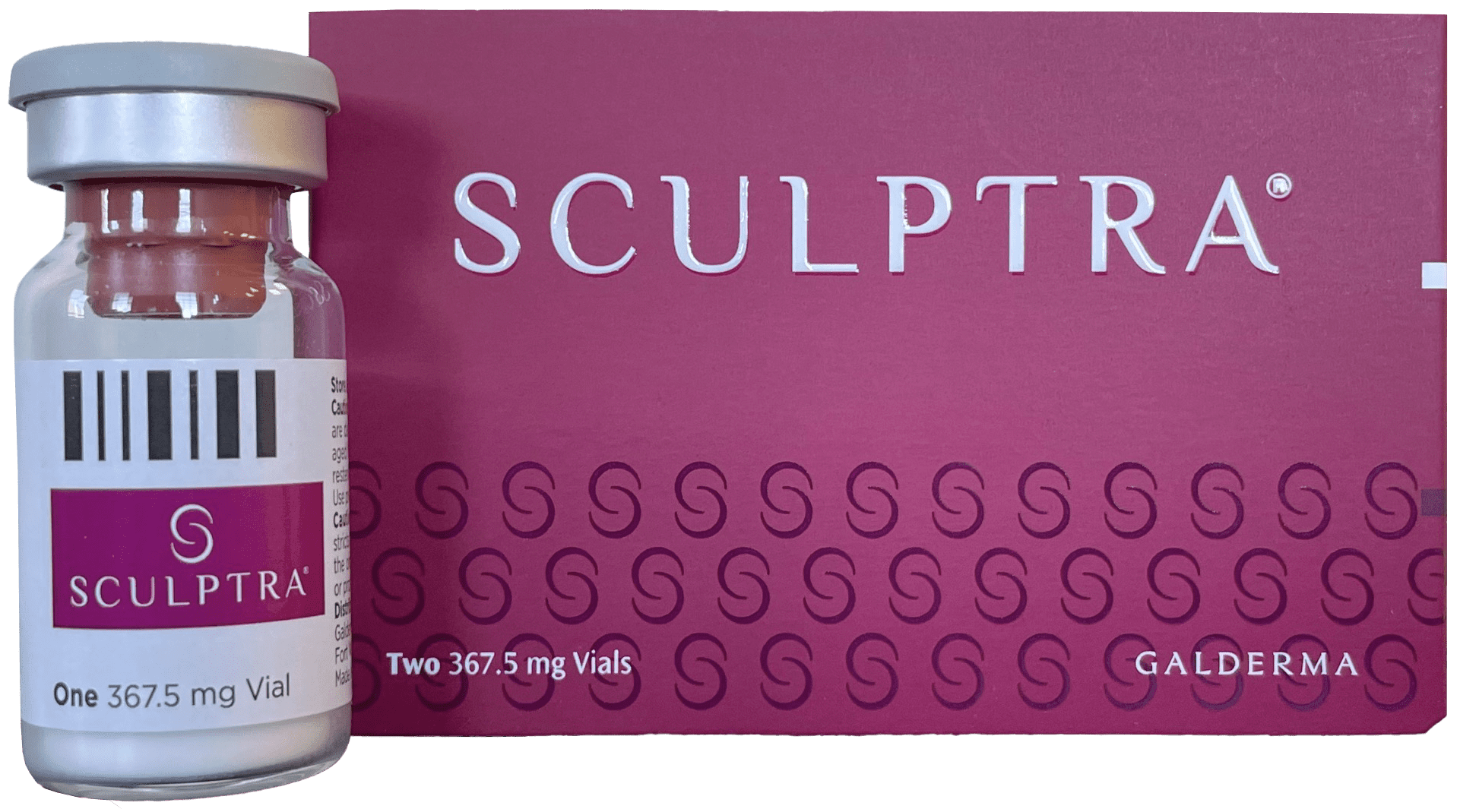
How Sculptra Works
Sculptra provides gradual, long-lasting facial rejuvenation by stimulating the body's own collagen production.
Collagen Stimulation: Poly-L-lactic acid (PLLA) microparticles are injected beneath the skin, where they stimulate fibroblasts to produce new collagen. As collagen rebuilds, the skin becomes firmer, smoother, and more youthful in appearance.
Progressive Volume Restoration: Rather than creating immediate volume, Sculptra gradually restores facial fullness and improves skin structure over the following weeks and months, resulting in subtle, natural-looking enhancement.
Common Treatment Areas
Sculptra is commonly used to treat:
Cheek volume loss
Temples
Jawline definition
Chin enhancement
Nasolabial folds (smile lines)
Marionette lines
Pre-jowl hollows
General facial volume loss and skin laxity
Safety and Potential Side Effects
Sculptra is generally considered safe when administered by a qualified, licensed healthcare professional. As with any injectable treatment, temporary side effects may occur.
Common side effects include:
Redness, swelling, bruising, or tenderness at the injection site
Mild pain or discomfort
Small lumps or bumps beneath the skin (usually temporary and minimized with proper massage)
Itching
Minor bleeding at the injection site
Most side effects are mild and resolve within several days. Your provider will recommend a post-treatment massage routine to help ensure even product distribution and optimal results. Patients should contact their healthcare provider if they experience severe pain, persistent swelling, signs of infection, or other unusual symptoms.